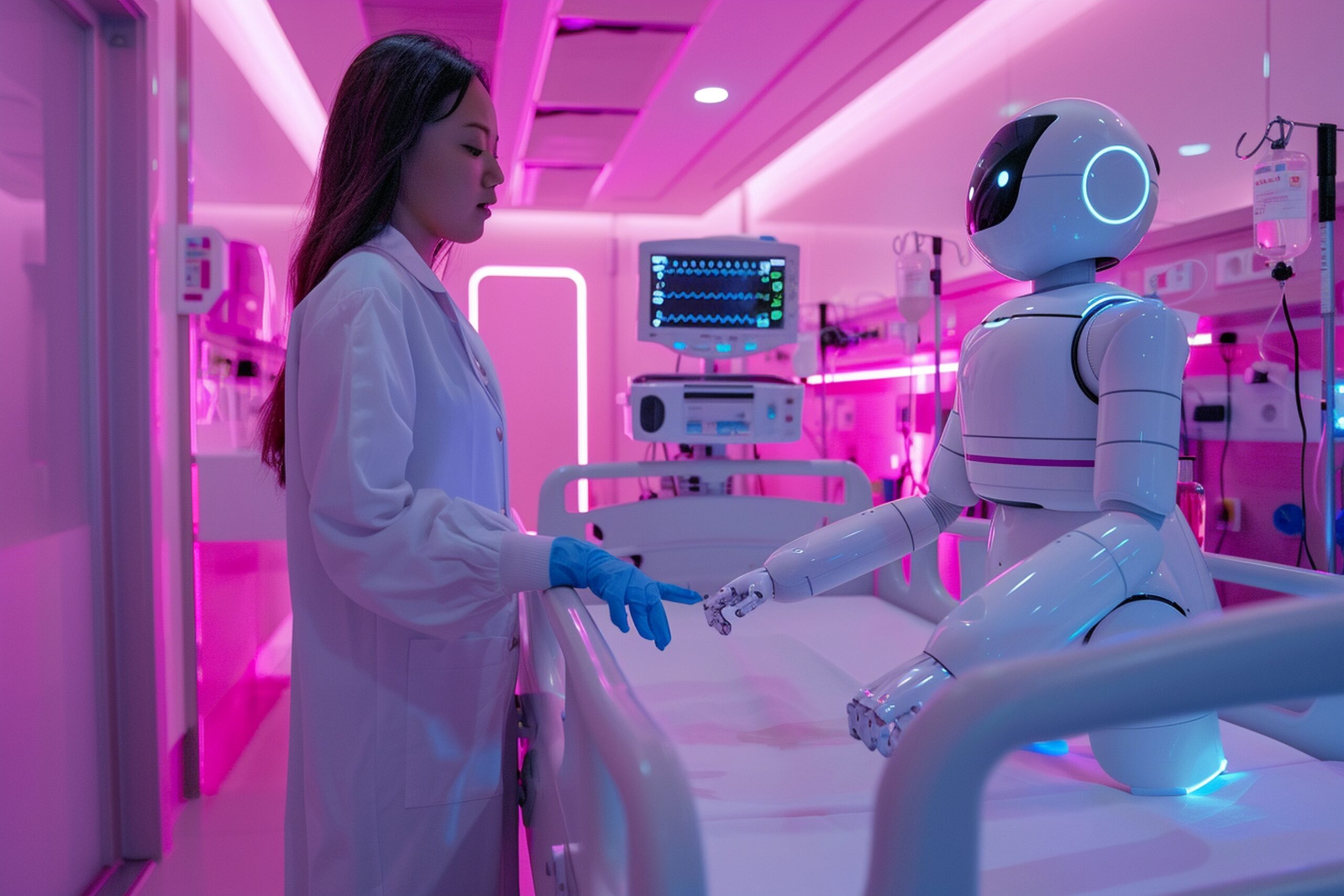
The fusion of AI and robotics is ushering in a new era of medical innovation. Hospitals around the world are using machine learning to diagnose diseases faster, predict patient outcomes, and assist in surgeries with unmatched precision.
AI algorithms can analyze X-rays, CT scans, and genetic data in seconds, identifying early signs of illnesses like cancer or Alzheimer’s that might escape human detection. Meanwhile, surgical robots perform delicate operations with micro-accuracy, reducing recovery times and complications.
Telemedicine, another AI-driven breakthrough, connects patients to doctors remotely—improving accessibility in rural or underserved areas. Predictive analytics also helps hospitals allocate resources efficiently, preventing overcrowding and treatment delays.
However, as technology advances, ethical challenges arise. Data privacy, medical bias, and overreliance on automation must be addressed to ensure equitable healthcare.
Despite the hurdles, one thing is clear: the future of medicine is digital, intelligent, and patient-centered. AI is not replacing doctors—it’s empowering them to deliver better care.