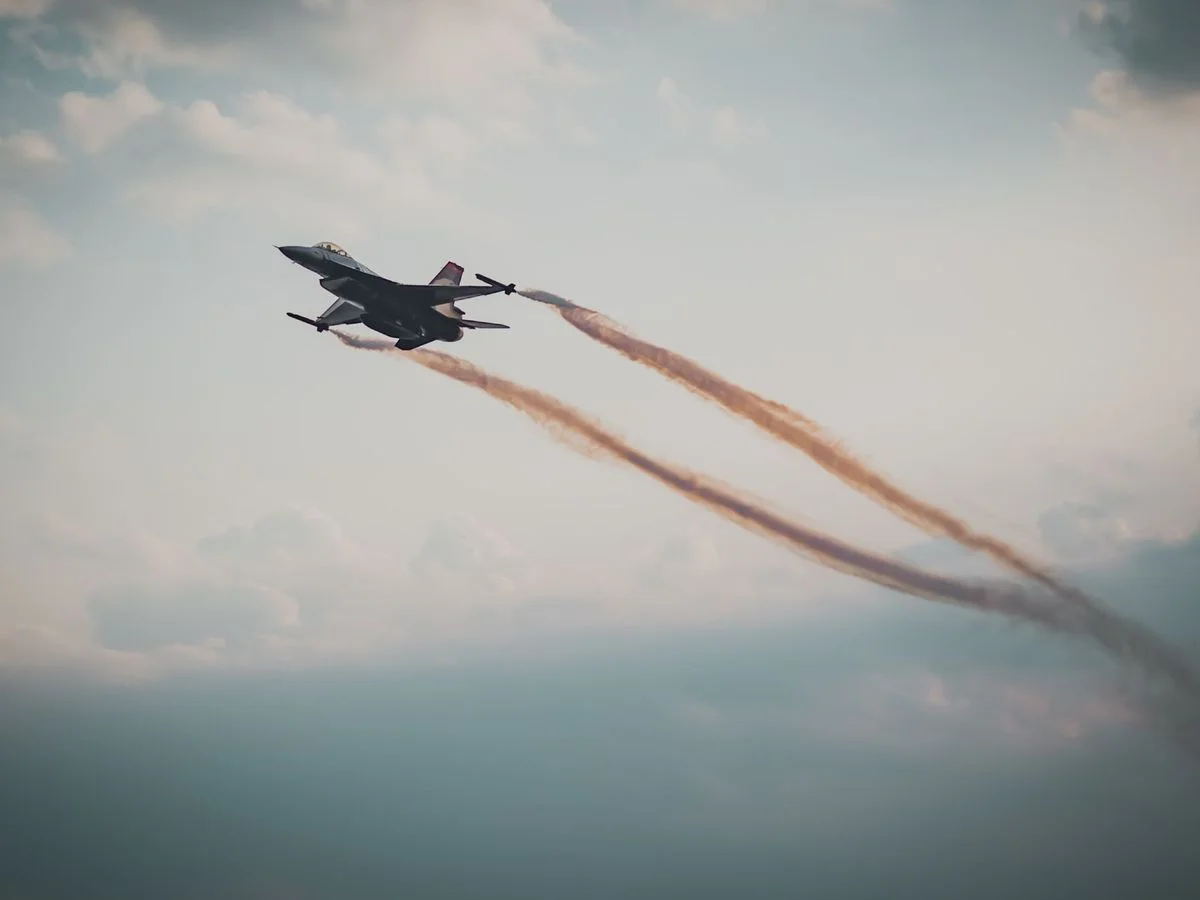
Poland, a key NATO ally, is reportedly reconsidering its potential acquisition of Boeing F-15EX fighter jets, with the European-built Eurofighter Typhoon emerging as a significant alternative. This development highlights a strategic shift in defence procurement for the Eastern European nation.
Reports from Nomad Lawyer indicate that Poland is eyeing a “European combat alternative” amidst discussions about its future air defence capabilities. This consideration puts the spotlight on the Eurofighter Typhoon, a multi-role fighter aircraft widely used by several European air forces.
Background
The potential shift in Poland’s defence strategy follows an earlier contemplation of acquiring Boeing’s F-15EX Eagle II. As a crucial member of NATO, Poland’s decisions regarding its military hardware have broader implications for regional security and interoperability within the alliance. The F-15EX, a twin-engine, all-weather tactical fighter, represents a high-end capability, known for its heavy payload capacity and advanced avionics.
However, the emergence of the Eurofighter Typhoon as a strong contender suggests a re-evaluation of specific operational requirements or strategic priorities. The Eurofighter Typhoon, developed by a consortium of European nations, offers a different profile, particularly in terms of its operational footprint and combat characteristics.
The Eurofighter Typhoon Emerges as a Key Contender
According to Simple Flying, the country in question, understood to be Poland, is considering the Eurofighter Typhoon partly because it is described as a “lighter-hauling” option compared to Boeing’s F-15EX Eagle II. This characteristic could be a significant factor in a nation’s decision-making process, influencing logistics, maintenance, and overall operational costs.
The Eurofighter Typhoon is a highly agile, multi-role combat aircraft, designed for air superiority and ground attack missions. Its adoption by various air forces across Europe, including Italy, demonstrates its proven operational effectiveness. The aircraft is designed to integrate seamlessly into complex air defence networks, offering advanced capabilities in various combat scenarios.
Italy, for instance, operates a dedicated Eurofighter Operational Conversion Unit, the 20th Squadron, which plays a critical role in training pilots for the advanced fighter. As detailed by The Aviationist, such units are essential for ensuring that air force personnel are fully proficient in operating and maintaining these sophisticated aircraft, highlighting the extensive infrastructure required to support a modern fighter fleet.
The consideration of the Eurofighter Typhoon by Poland underscores a potential trend among NATO allies to diversify their defence procurements, balancing advanced capabilities with strategic partnerships and economic considerations. The choice between American-made and European-made platforms often involves a complex interplay of political, economic, and operational factors.
FAQ
- Q: What is the main development regarding Poland’s fighter jet acquisition?
- A: Poland, a NATO ally, is reportedly considering the Eurofighter Typhoon as an alternative to the Boeing F-15EX fighter jet, according to recent reports.
- Q: Why is the Eurofighter Typhoon being considered?
- A: The Eurofighter Typhoon is described as a “lighter-hauling” option compared to Boeing’s F-15EX Eagle II, according to Simple Flying.
- Q: Is the Eurofighter Typhoon currently in service?
- A: Yes, it is in service. For example, Italy operates a Eurofighter Operational Conversion Unit, the 20th Squadron, as reported by The Aviationist.
What this means for you
For readers in Leeds, Yorkshire, and the wider UK, developments in international defence procurements, particularly within NATO, have significant implications. While this specific decision by Poland is focused on its national defence, it reflects broader trends in European security and military cooperation. As a key member of NATO, the United Kingdom shares collective security interests with allies like Poland.
The choice of military hardware by one NATO nation can influence interoperability across the alliance. A move towards European-made platforms like the Eurofighter Typhoon can also have indirect economic implications, potentially influencing defence industry supply chains and job markets across the continent. Although the direct impact on local communities in Yorkshire might not be immediately apparent, the strength and cohesion of NATO, bolstered by its members’ defence capabilities, contribute to overall geopolitical stability, which affects trade, travel, and international relations relevant to all UK citizens.
These decisions underline the ongoing evolution of international defence strategies and the continuous efforts by NATO allies to modernise their forces in response to global challenges. Understanding these geopolitical currents is crucial for appreciating the complex web of relationships that underpin global security.