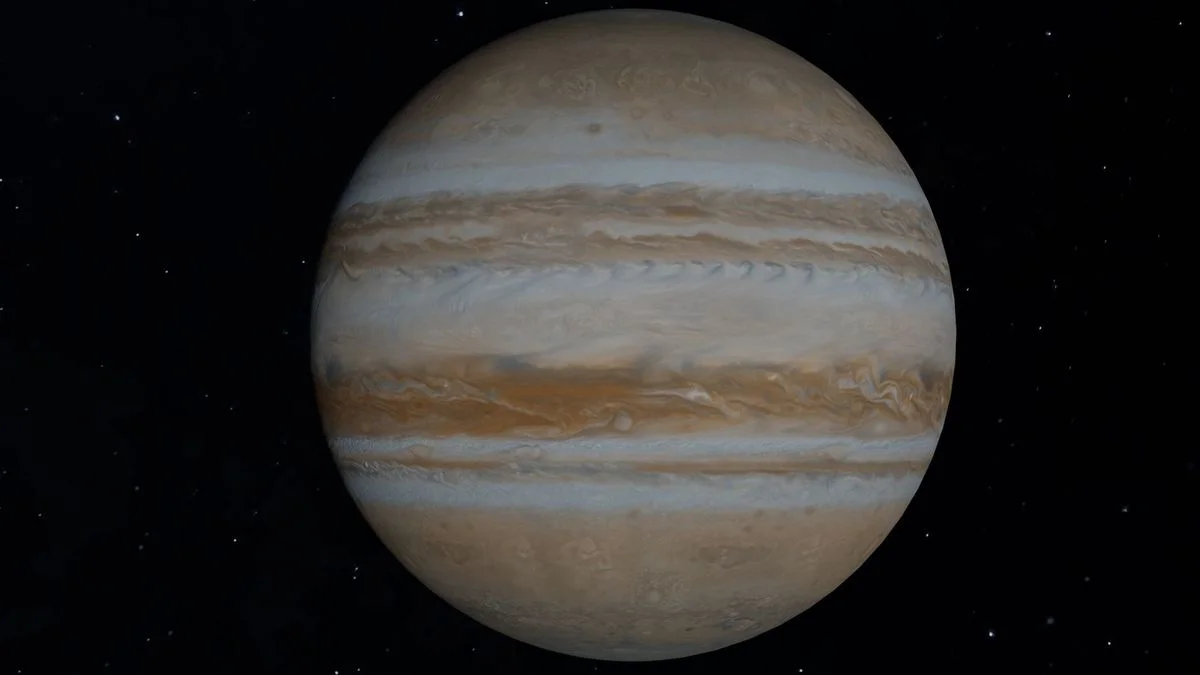
Scientists have successfully uncovered a new exoplanet, described as having “spent a decade playing ‘hide-and-seek'” before its detection, according to reports from ITVX. This significant astronomical find represents a breakthrough in the search for celestial bodies beyond our solar system, with astronomers finally saying ‘Found you!’ after years of persistent observation. The discovery involves what Space.com describes as the “faintest exoplanet ever seen from Earth,” highlighting the advanced capabilities used to bring this hidden world to light.
Background
The search for exoplanets—planets orbiting stars other than our Sun—has intensified in recent decades, driven by both technological advancements and scientific curiosity. Each new discovery contributes valuable data to our understanding of planetary formation, the diversity of stellar systems, and potentially, the conditions for life elsewhere in the universe. This particular discovery stands out due to the extensive period of time it eluded detection, a challenge that underscores the immense difficulties involved in observing distant, faint objects in the cosmos. The prolonged effort mirrors a cosmic game of ‘hide-and-seek,’ as noted by multiple sources covering the announcement. This new addition to the growing catalogue of exoplanets was located in what NASA Science refers to as a “famous star system,” adding further intrigue to its existence and characteristics.
A Decade of Detection Challenges
The term “hide-and-seek” used by ITVX to characterise the planet’s decade-long evasion underscores the sophisticated and patient techniques employed by astronomers. For ten years, this elusive world remained hidden from view, presenting a significant observational challenge. Space.com further emphasised the magnitude of this achievement, reporting that astronomers managed to “spot faintest exoplanet ever seen from Earth.” This implies that the planet’s inherent dimness or its orbital characteristics made it particularly difficult to distinguish from the background stellar light, requiring sustained observation campaigns and advanced analytical methods. The ability to detect such a faint object pushes the boundaries of current astronomical technology and observational techniques. The perseverance of the scientific teams involved was crucial in ultimately bringing this hidden planet into scientific focus.
NASA’s Webb Unveils the Hidden World
A key player in this discovery was NASA’s Webb, which, according to NASA Science, “Discovers Hidden Planet in Famous Star System.” While the specific details of Webb’s involvement in the ‘hide-and-seek’ aspect are not fully detailed across all snippets, its role in uncovering a “hidden planet” reinforces the idea of a challenging detection. The James Webb Space Telescope (often referred to simply as ‘Webb’) is renowned for its unparalleled infrared observational capabilities, allowing it to peer through dust and gas that obscure visible light, and to detect fainter heat signatures from distant objects. This makes it an ideal instrument for finding planets that are either too small, too cold, or too distant to be easily spotted by other means. The combination of persistent observation efforts and the cutting-edge technology of instruments like Webb ultimately led to the successful identification of this previously unseen world, marking a significant moment in exoplanet research.
Frequently Asked Questions
- Q: What is the significance of this exoplanet discovery?
A: This newly discovered exoplanet has been described by Space.com as the “faintest exoplanet ever seen from Earth.” - Q: How long did scientists search for this planet?
A: The planet “spent a decade playing ‘hide-and-seek'” before its detection, according to reports from ITVX and Space.com. - Q: Which observatory or instrument was involved in the discovery?
A: NASA’s Webb was involved in discovering a “hidden planet” in a famous star system, as reported by NASA Science.
What This Means for You
For residents of Leeds, Yorkshire, and the wider UK, the discovery of this new, faint exoplanet underscores humanity’s continuing quest for knowledge and understanding of the universe. While this particular planet is light-years away and does not directly impact daily life, such breakthroughs in astronomy expand our cosmic perspective. They fuel scientific innovation, inspire future generations of scientists and engineers, and demonstrate the remarkable capabilities of international collaboration in space exploration. These discoveries, often made possible by advanced technology and decades of dedicated research, contribute to the UK’s broader scientific standing and our collective appreciation for the wonders beyond Earth. It serves as a powerful reminder of the vast, unexplored cosmos awaiting further revelation, sparking curiosity and encouraging engagement with science across all communities.